Creating classrooms where the newness and wonder of learning is sustained.
“I am terribly interested in kids having confidence in their own vision. Children need to plunge in, to choose, to disclose, and to move. This is the road, it seems to me, to mastery.” (Maxine Greene, 1995)
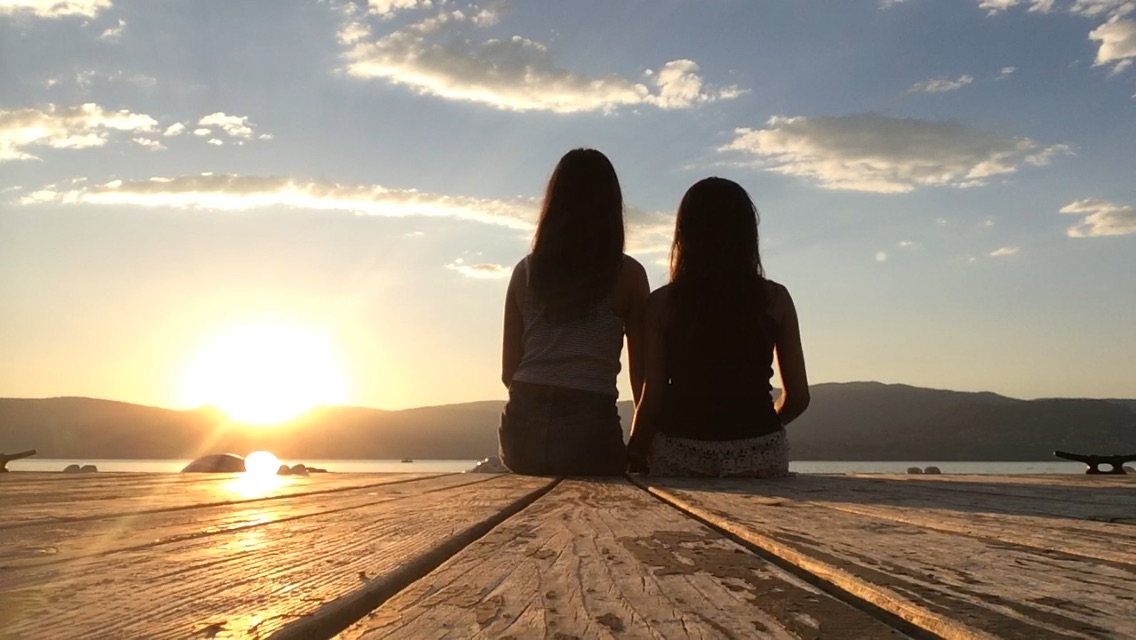
Kelowna, Summer 2014
im·ag·i·na·tion
iˌmajəˈnāSH(ə)n/noun
- the faculty or action of forming new ideas, or images or concepts of external objects not present to the senses.
"she'd never been blessed with a vivid imagination"
synonyms: creative power, fancy, vision, mind’s eye- the ability of the mind to be creative or resourceful.
"technology gives workers the chance to use their imagination"
synonyms: creativity, imaginativeness, creativeness, vision, inspiration, inventiveness, originality, innovation- the part of the mind that imagines things.
"a girl who existed only in my imagination"(Oxford Dictionary.com)
Chapter One: Introduction
Cobblestone Streets
Walking the streets of Paris near Montmartre as a small child, I amused myself by hopping from one large stone to another, trying to avoid stepping on the lines. In my faux fur leopard coat and black patent leather shoes, I imagined slipping and falling between the crevices of the smooth cobblestones and being engulfed in mysterious lands. The constant chatter of my parents and their friends was a distant, comforting sound as I hopped along the city sidewalks. I half listened to them philosophize about one topic or another: which Rolling Stones album was better, what art installation was gaining popularity, which restaurant had the best steak frites.
I lived amongst adults then and I was quite happy. I felt their love and attention flutter around me. The newness of my world and the discoveries I made unravelled themselves simply by my being present in the world. The many stories I heard about the city I lived in were my first lessons. I believed in the Renaissance. I wished I could meet Leonardo Da Vinci. I remember searching for the engraved capital letter N surrounded by the laurel wreath on stone bridges, and knew Napoleon had them built for his empire. Uncovering these codes made me feel I belonged.
I only attended Kindergarten a short time. My mother, Laura, taught me from home, as she did not see the urgency for children to attend school at such a young age. I completely agreed. Those were my formative years, from birth to age five.
Then came the big move to Canada. All I knew and believed in changed. I adapted to my new place. I quickly learned to like school since I felt I had no choice. Everyone attended school and I was excited to learn. Before the end of my first year, I remember being disappointed that they were not teaching me more. Or was it they were not teaching me what I wanted to learn?
Capstone Arguments and Questions
Many children come into Kindergarten wide-eyed, passionate and full of hope, every experience and personal interaction shaping their little being. As teachers, we create spaces for young children with the best of intentions, decorating classrooms with brightly coloured bulletin boards, posting the alphabet chart on the wall and forming cozy reading corners. However, the school system is structured in such a way that learning outcomes, curriculum standards and tests obscure the humanity in education. Sadly, over my two decades as an educator, I have noticed how children’s passion and wonder for understanding and exploring the world fades as they meander through the elementary school years.
In this capstone project I contemplate the role of imagination and creativity in nurturing a passion for learning in children. I argue for the importance of allowing time to foster individual students’ passions within the prescribed curriculum. I find myself searching for what is sacred about imagination and creativity as I consider characteristics that must be present in the classroom to drive students to be passionate and lifelong learners. I feel it is pivotal today that educators value individual passion, imagination and creativity as much as they value literacy, numeracy and other disciplines. As Ken Robinson said in his TED Talk on How Schools Kill Creativity, “The brain is not divided into compartments. In fact, creativity—which I define as the process of having original ideas that have value—more often than not comes about through the interaction of different disciplinary ways of seeing things.” Imagination has driven every uniquely human achievement. “Imagination has led us from caves to cities, from bone clubs to golf clubs, from carrion to cuisine, and from superstition to science” (Robinson, 2009, p. 57). Teaching creatively and practising a passion-driven curriculum in the classroom fosters students’ awareness of something more, something to drive towards, and something to be interested in, “to perceive openings through which they can move” (Greene, 1995, p. 11).
Using narrative inquiry in the form of vignettes, fieldnotes, poetry and photography, I explore aspects of my childhood, my student life and my professional life to find the meaning in my experiences. In the three chapters entitled Imagination and the Child, Imagination and the Student, and Imagination and the Teacher, I stand in the gap between my personal stories and the continuous flow of interpretations and ongoing dialogue with authors, philosophers and scholars. I chose particularly salient moments to share, as they are the memories that constitute who I am. Reflecting on lived moments allows me to pause and take notice of the details. It is a demanding task, as Carl Leggo states, because “interpretation is inevitably about standing in the spaces between the experience of mystery and the effort to reveal the mystery” (Leggo, 2010, p. 108). Understanding, therefore, is tentative and malleable, full of complexity and richness. However challenging, I find the beauty in narrative inquiry is that sometimes the simplicity of an instant reveals new and unexpected insight. Once I am acutely aware of the details, I feel tension where once I felt compliance. “Pedagogy requires a phenomenological sensitivity to lived experience. Pedagogy requires a hermeneutic ability to make interpretive sense of the phenomena of the lifeworld in order to see the pedagogic significance of situations and relations of living with children” (Van Manen, 1990, p. 2).
Examining imagination and creativity in pedagogical practice has led me to remarkable educational philosophers and authors like Maxine Greene, Paulo Freire, Max Van Manen, Hannah Arendt, Ken Robinson and Ted Aoki. All of these authors claim, in their own way, that pedagogy resides in questioning, epiphanies, breakthroughs, openings and awakenings. “Opening ourselves as imaginative, intuitive, feeling, thinking beings, we may discover something about what it signifies to create our own meanings along with other human creatures.” (Greene, 1978, p. 31).
Maxine Greene, an educator and philosopher, claims education must revolve around imagination. She has argued for many years that imagination “can be an antidote to the meaninglessness and boredom of today.” (Greene, 2009). She refers to the term wide-awakeness as the consciousness educators need to encourage in their students. She says that in order for children to find their passion they must know themselves first, know where they stand in the world and then continue to question the world around them. The only way to awaken to life, awaken to its possibilities, is self-awareness. Like Maxine Greene, I believe teachers and students must engage in activities of meaning-making in dialogue and reflective understanding not only of the school curriculum but also of their social realities.
In a similar manner, Paulo Freire, in Pedagogy of the Heart (1997), defends the importance of the democratic educator as affirming authority without disrespecting the freedom of the learner. Freire argues for a progressive perspective where teaching should “challenge learners to apprehend the object, to then learn it in their relation to the world,”(Freire, 1997, p.75) and thus the task of teaching does not become mechanical in fashion. Both philosophers deem the student’s voice and the freedom to inquire vital in educational practice, and they emphasize that learning is about making meaning of the world and moving towards a transformation.
Recapturing the feeling of wonder I experienced as a child walking on the cobblestone streets of Paris is what I am searching and arguing for. I want the students in my care to experience fearless exploration, to be motivated and courageous learners because passion and creativity is part of their classroom atmosphere. I feel educators must find ways to instil in their students the confidence to see people, places and things with multiple perspectives and newness. We live in a time where technology and social media bombard children and influence their view of the world. It is my hope not only to anchor my students with the awareness of their individual passions, but also to inspire them to be wide-awake. I see the discovery of individual passion as a life preserver in the rough waters of self-identity.

“…each new generation, indeed, every new human being as he inserts himself between an infinite past and an infinite future, must discover and ploddingly pave it, anew.” (Levinson, 2001, p. 32)
Chapter Two: Imagination and the Child
Basil and Tomato Sauce
My great-uncle Rafaelle was known not only for his wine, but also for winning the town’s watermelon eating contest. He held the record in the mid-1970s at ten kilograms. I can still see his eyes dancing in excitement as he recounted his triumph, sometimes even demonstrating with a large piece of watermelon on his plate.
I spent my childhood summers visiting family in the south of Italy. I can still smell the aroma of basil and tomato sauce in the air as I walked up the staircase to where my grandparents lived. At every floor, hints of family recipes passed down from generations seeped from underneath the front doorways. After we came back from spending the morning at the beach, my grandmother would greet us at the door and before we even had time to put our bags down, we would find ourselves sitting around her kitchen table. Plates of fresh pasta, focaccia bread, cheeses and Rafaelle’s homemade wine awaited us. As a little girl, even I had a little wine mixed with my glass of water.
Natality and Its Ties to Imagination
My childhood summer holidays represent a source of endless imagination. Whether or not I have romanticized my memories, the emotions linked to my experiences during my summers in Italy continue to ignite imagination and creativity in me today. The people I met, rituals I observed and the objects I saw shaped my perspective on how to be in the world. My great-uncle Rafaelle was never without a story. He was up just before dawn every day; he drove up to his farm on the mountaintop just in time to watch the sunrise before work. His jolly laughter and loud commanding voice always caught my attention as a child around the dinner table. Animated stories of Zio Rafaelle’s great bartering taught me how people in the village relied on each other to live. I found it fascinating to listen as he explained how he would exchange his spare crop of green, red and white beans, chickpeas, zucchinis and artichokes for all the milk, ricotta and bocconcini cheese he needed. His big, rough hands told stories of hard work on the land. The laugh lines around his eyes marked a sort of joie de vivre that was evident as he sipped on his Grappa at the end of the meal. “Why don’t you visit more?” he would ask. “What is so great about la citta di Parigi?” He never left his town of Castellaneta, nor did he want to.
Compared to life in the cosmopolitan centre of Paris, the simple life of Castellaneta exposed me to a new view of the world. The summers I spent in Italy introduced me to another perspective on how to live. I was the child-in-our midst who encompassed the spirit of newness. As a young child, I did not know any other way but to be open to a different view without judging, by just being present in my environment, free to wonder, to explore and to imagine. To this day, the memories of my great-uncle Rafaelle remind me to appreciate the little things in life and to remember that everyone lives in their own reality.
Today, as a teacher, I see the difficult but motivating task of preserving newness as a characteristic that must be present in the classroom to foster imagination and creativity. Hannah Arendt, an influential political theorist and educational philosopher of our time, says the process of education comes by gradually introducing children to the adult world they are born into. She calls natality the essence of education. Arendt defines natality as the human capacity for renewal, where with each birth comes a sense of newness and hence a power to recreate the world. As teachers, there is opportunity and an imperative in this concept; it is an opportunity for continuous hope, but it comes with an implicit burden. There is hope for children to reach their personal potential as well as hope for social transformation through imagination. The burden natality presents is that the world does not simply precede us, but it also constitutes us. Hence, children arrive into the world already determined by some kind of story, or what Natasha Levinson refers to as belatedness in her article Teaching in the Midst of Belatedness: The Paradox of Natality in Hannah Arendt’s Educational Thought (2001). “Belatedness does not simply position us as individuals in relation to a past; it also positions us in relation to others in the present” (p. 16). Like everyone else, I am an heir to and am constituted by my history. In that sense, I arrive belated, already configured and predetermined in my narrative being. My childhood memories are inserted into a timeline of a particular history. These memories influence and shape my life now, as I mediate the gap between the past and the future.
“This gap symbolizes not an escape from history but a fissure within time. It signifies the break in tradition that characterizes modern life. Arendt points out that this break in tradition is not without its dangers—most notably, that we risk forgetting the past, which in turn means that we will have lost our guide to understanding the present” (Levinson, 2001, p. 30).
Dissecting the gap I found myself in as a child, I imagine a timeline of past generations who lived off the land in Italy, where the doctrine of the Catholic Church ruled family traditions. I see the gap where I was born, in a rebellious European time with movements against the government, tradition and religion; and I imagine the future, uncertain yet full of hope, with the lingering threat of nuclear weapons and the excitement of new technological advancements.
Understanding where I came from and who I was as a child helps me gain insight into my role as a teacher in the presence of newcomers. I wonder if preserving the new in the midst of belatedness is only possible in a classroom with the right atmosphere? “It is worthwhile to pause and to consider the ways in which education can facilitate or smother natality and to reflect on the difficult mix of passion, patience, responsibility, and detachment” (Levinson, 2001, p. 16). To me, the right atmosphere lies with the conscious creation of spaces for students in classrooms where learning revolves around imagination and creativity. “Consciousness as perspectival grasping is our way of encountering the natural and human world” (Greene, 1978, p. 15). Multiple perspectives and inquiry about the world are ways of encouraging imagination. Too often, education has become about the teachers asking the students questions, instead of students asking the questions.
When I think of ways I learned as a child, I remember the freedom I had to play, explore and imagine while vacationing in the summers at my grandparents’ place. The image of countless rows of olive trees lining fields of red and dry Mediterranean soil has imprinted itself in my heart. I remember looking out the car window at their trunks and thinking of them as wise, old beings. They were never perfectly straight, but more crooked and knotted, as if holding up their arms to the sky in victory. The olive trees’ solid branches had silver and sage coloured leaves that shimmered in the wind. I always missed the sight of olive trees once we returned home to Paris. Ultimately, the beauty in experiencing life in two very different places was that I was introduced to the “world ‘as it is,’ in all its potential and with all its flaws” (Levinson, 2001, p. 17). I learned to understand a new language, tasted new foods and found new ways of playing with children by just being present in the world. As the newness of my discoveries unravelled themselves, I remember developing a passion to imagine and a desire to learn more.
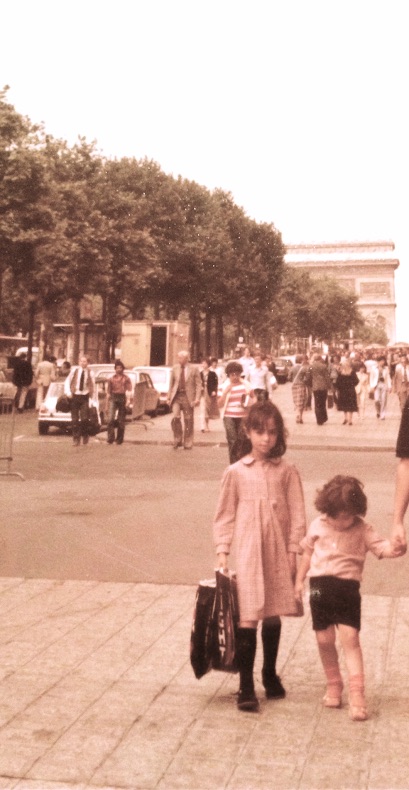
Paris, August 1979
The Newcomer
The afternoon in the south of Italy is spent napping. The heat is so unbearable that the stores, banks, gas stations and post offices close their doors. The entire town pauses, eats and sleeps.
The first time I went back to Castellaneta with my husband and my children we rented a villa near the beach. One day, more family decided to stay for lunch. Worried that we did not have enough pasta to feed the hungry crowd, my husband decided to find somewhere open for business. My loud and animated Italian famiglia told him he was crazy, his mission bound to fail.
But determined to beat the odds, he got into our rental car and ventured out onto the hot, deserted streets. He drove around astounded that indeed everything was closed. The ritual of the afternoon siesta made its presence known. Monetary gain and customer service was worthless to the people of the town. Then he noticed from the corner of his eye, a half-opened garage door to one of the local restaurants.
“Hello, Hello?” my husband called as he pulled up the heavy metal garage door. The three men sitting on crates looked up, cold beer and Panini in hand, “Si, cosa succede?” Miming his story to the young Italian men, he made them understand that he had run out of pasta with a house full of guests—every Italian’s worst nightmare! Sympathizing with the foreigner, they offered him a large portion of homemade pasta from their restaurant and sent him on his way. My husband signalled “how much?”—but it was no charge, of course.
Curiosity and the Passion to Learn
Regardless of social or cultural positioning of the newcomer, whether a young child entering school or, in my husband’s case, a foreigner in a new land, imagination and creativity empower the person to act and hence learn. The beauty of imagination and creativity is that it is free and accessible to all. There are no defined boundaries and the possibilities are endless. The freedom to let people discover the world around them nurtures a passion to learn. Experiential learning creates a lasting impact on the learner because it is human nature to want to discover. Creativity obstructs conformity and I believe it is the engine of achievement. Human life is inherently creative. It is why human culture is so fascinating, diverse and dynamic. “We all create our lives through this restless process of imagining alternatives and possibilities, and one of the roles of education is to awaken and develop these powers of creativity” (Robinson, 2013 TED Talk).
Early acquisition of knowledge is propelled by the power of exploration and curiosity. “When children are curious, they learn. It turns out that curiosity is not merely a nicety but a necessity” (Engel, 2011, p. 628). In the article Children's Need to Know: Curiosity in Schools, the author Susan Engel argues curiosity is fundamental to early childhood development, and although it should be an essential part of the development of school-aged children, it is regrettably absent from the classroom. Engel’s quest to better understand the power of curiosity in a classroom setting is based on well-established research from past to more recent studies. She makes reference to scholars such as Piaget and Kagan, who highlight the idea that children’s development is driven by their efforts to understand the unknown. She also refers to contemporary authors such as Gopnik, Meltzoff and Kuhl (2000), who published The Scientist in the Crib: What Early Learning Tells Us About the Mind. They discuss the importance of the human relationship in supporting curiosity and explain that “children’s curiosity unfolds within a social context. Not only are they curious about people; their curiosity is influenced by those around them” (Engel, 2011, p. 629).
Similar to Engel, I believe that the type of interaction between the teacher and the student is the determining factor of whether or not students’ curiosity is fostered in the classroom. “The quality of a child’s attachment has a powerful influence on the vigour and depth of her exploration of the world around her” (Engel, 2011, p. 630). To guide her inquiry, Engel created a curiosity box based on the one used by Henderson and Moore (1980) and studied its effect in the classroom. This box, with eighteen little drawers, was placed in many different Kindergarten and Grade 5 classrooms. She observed who came up to it, how often children opened it, and how long they spent looking at the objects inside the drawers. Her findings found both younger and older children were equally curious, but what differed was that not all classrooms invited the same level of curiosity. The author found that “there was a direct link between how much the teacher smiled and talked in an encouraging manner and the level of curiosity in the room expressed” (Hackmann and Engel, 2002, p. 635). It is amazing how a smile can open a space where people can make contact. “Buytendijk (1998) once described smiling as a moment, an encounter where someone ‘enters the threshold of my inner life and whose own inner life reveals itself to me.’” (Van Manen, 1997, p. 16). This sort of study reminds me of the important role of teacher training. I feel teachers should be trained with an emphasis on human connections and on techniques such as questioning, guiding investigation and scaffolding conversations. Training should also focus on how to create programs where children have the time and guidance to explore their interests in the midst of the prescribed curriculum.
Engel’s observations bring out the important notion that question-asking is a central part of being a child. A recent study by Chouinard (2007) recorded toddlers and preschoolers talking at home with their mothers and found that they “asked an average of seventy-six information-seeking questions per hour” ((Engel, 2011, p. 632). Given such data, Engel assumes that kind of question-asking and data-gathering would be even more helpful once “children begin formal learning, where, in theory, the acquisition of knowledge and intellectual skill take center stage” (Engel, 2011, p. 632). But she realizes, through her own set of studies of children in Kindergarten and Grade 5 classrooms, that this is not the case. “Many children are spending hours a day in school without asking even one question or engaging in one sequence of behaviour aimed at finding out something new” (Engel, 2011, p. 633). Are educators then not in a prominent role to act as the vehicle to encourage or discourage investigation?
Often, the early childhood home encourages creativity, unlike the environment of elementary classrooms. It is not because teachers do not value the characteristics or the benefits of curiosity. The problem lies with the pressure for teachers to meet the curriculum standards. “Mastery rather than inquiry seemed to be the dominant goal for almost all of the classrooms observed. In fact, it often seemed that finishing specific tasks was more salient than actually learning the material”(Engel, 2011, p. 637).
Similar to Engel, I also agree with encouraging a “shift in the way we see the traditional role of a teacher, from one who answers questions to one who elicits them” (Engel, 2011, p. 642). This does not mean teachers need to let their students’ every question and “random tinkering derail the lesson plan. But they can plan significant portions of the curriculum around the goal of helping children figure out just what it is they want to know and then showing them how to go about getting the answers to their questions” (Engel, 2011, p. 642).
Like a foreigner in a new land, children are newcomers to the classroom. A passion to learn will develop with the freedom to imagine, explore and discover. Often, if a child’s curiosity is lit, they will learn with minimal assistance. Human creativity, as Ken Robinson has expressed in his TED Talk on How Schools Kill Creativity, begins with being curious and taking a chance. “If you’re not prepared to be wrong, you’ll never come up with anything original… And we’re now running national education systems where mistakes are the worst thing you can make. And the result is that we are educating people out of their creative capacities” (Robinson, 2013 TED Talk). Picasso once said that all children are born artists; the problem is to remain an artist as we grow up.
“The world is changing faster than ever in our history. Our best hope for the future is to develop a new paradigm of human capacity to meet a new era of human existence. We need to evolve a new appreciation of the importance of nurturing human talent along with understanding how talent expresses itself differently in every individual.” ( Ken Robinson, 2010, p. xiii)



Chapter Three: Imagination and the Student
The Silver Pendant
I wondered how it must have felt to write with a plume. My feet dangled from the chair as I sat quietly at my Grade 1 desk, contemplating the circular indent at the top right corner of the wooden surface. In the days when children used to write their lessons in ink, this was where the inkwell rested. I always felt sad hearing stories of students punished for accidentally dripping ink across their page.
To my left, the classroom windows half covered with snow made me shiver. The Montreal winter months often confined us to the indoors because of the brutal cold outside. Bundled in our snowsuits, scarves and hats, we would only be allowed to play outside at recess and lunch hour if the temperature was above minus fifteen degrees Celsius.
We each wore a silver pin attached to our navy blue school uniform sweater. Every good student in our class had a different Saint pendant fastened to it. Break any rule, whether talking out of turn or giggling in the line up, and Sister Julie would theatrically walk up to her target and ceremoniously take his or her pin away. She would then put the pin into her pocket and only return it three days later if the student had proved worthy of earning the silver pendant back. One could easily recognize the good kids from the bad. All you had to do was look for the pin. Some never earned their pin back.
I learned perfect cursive writing by copying poems and stories. I learned to decode words by reading storybooks that never had a point, such as stories of children walking their dogs to the pond, with no climax, no problems nor solutions. Every day we practised rote counting and rote reading.
Church on Fridays was my favourite part of the school week. All students attending L’Ecole Saint Joseph sat in the pews, facing the front and listening to the priest read from the Bible. Finally, I thought to myself, these stories have a plot and interesting characters and settings. One day, following the children’s liturgy, I asked Sister Julie if these stories were really true or if they were only make believe. She bent down and whispered that indeed, they were true as long as I had faith. Faith? “What does that mean?” I asked. She replied, “It is just something that you have and that you do not question.”
From Passionate to Dispassionate
The silver pendant fastened to my primary school uniform and the smell of the varnished wood from the pews in the church are my most vivid recollections of the four years I spent at l’Ecole Saint Joseph. Imagination and curiosity that once propelled me to learn as a young child were replaced by mindlessness and conformity as a young student. Mindlessness, to me, is a lack of engagement and a sort of absence of deep thoughts or connections. Although I know I was well taken care of and respected by the adults around me, the primary classrooms I attended had a restrictive atmosphere of obedience and an expectation of compliance to the rigid curriculum imposed. My fundamental academic needs were met: I learned to read, to write and to do arithmetic at an age-appropriate level. However, I do not remember being encouraged to be open-minded. Nor can I remember a teacher or a moment I felt connected with. Order and silence surrounded me at school. There was a lot of time spent practising being quiet: quietly lining up, quietly listening to the teacher, quietly working on repetitive and close-ended questions, which demanded a short or a single-word answer.
Rationalists, wearing square hats,
Think in square rooms
Looking at the ceiling.
They confine themselves
To right-angled triangles.
If they tried rhomboids,
Cones, waving lines, ellipses –
As, for example, the ellipse of the half-moon –
Rationalists would wear sombreros
This stanza is from Wallace Steven’s poem Six Significant Landscapes. Wallace Stevens was an American modernist poet educated at Harvard and then New York Law School. For a man who worked most of his life as an executive in an insurance company, he had a fascinating poetic gift. He was also known for his interest in the transformative power of the imagination. I chose the lines of his poem because they remind me of my primary education. I was confined to right angles, learning in a one-dimensional way. The contrast in the poem between the precision of right angles and the oscillation of waves and curves speaks to the contrast of straight-line thinking compared to the waving lines of creativity. A waving line represents a sort of letting go. It is a phenomenon found in paintings, in writing and even in the movement of dance. The fluidity of the curved line also embodies flexibility and variation. Hence, what is implicit in the last line of Stevens’s poem is that the way to see things differently and more imaginatively is to let go.
My biggest disappointment in primary school was the minimal role of the Arts. Other than the occasional seasonal craft, drawing, painting, sculpting or drama were inexistent. I think of my classmates at that time and now realize they had their own individual talents and interests. Where I was missing the Arts focus in my education, another could have been yearning for more physical activity or greater exposure to the Sciences. The fact is we all have capabilities and “we think about the world in all the ways that we experience it. We think visually, we think in sound, we think kinaesthetically. We think in abstract terms, we think in movement.” (Robinson, 2006 TED Talk). It is no wonder that conformity results in dispassionate learners. Education, I feel, needs to focus on how to sustain the energy, excitement and love for learning that so many young students demonstrate when they first enter the school system.
Exploring Children’s Passions
Passion in education is a term frequently spoken about in articles and in conferences relating to gifted learners. In my research on the passion for learning in children, I found there is little study on how passion is experienced by children. It is a phenomenon rarely studied compared to related topics such as motivation and learning. Exploring Children’s Passion for Learning in Six Domains, by Coleman and Guo (2013), is one article I found interesting because it serves as a beginning point to answer questions such as, “Are there signs of early passion? What is the experience of living with a passion? What is the developmental history of a passion? Is the path similar across various interests or domains?” (p. 157). The authors discovered central characteristics shared by the children in their study who had a passion in various domains, such as acting, reading, filmmaking, spelling and math. The first trait that was a key factor in passion for learning was a receptive and supportive family. Secondly, the learning for the child, in whichever passion domain, was effortless, fun and evolved rapidly. Thirdly, the children found that the thrill of mastery they experienced was the payoff for further pursuing their passion. Reflecting on my passion for the Arts as a child, I understand how it was sustained through some periods in my life where school could have stifled it. My parents supported my love of art both emotionally, by affirming and appreciating my creations, and materialistically, by providing me with supplies and registering me in extra-curricular classes. Art always came easily to me, and because I felt I was good at it, I practised more and improved my skills. As in Coleman and Guo’s research, I too found the thrill of mastery to be rewarding enough to pursue my passion.
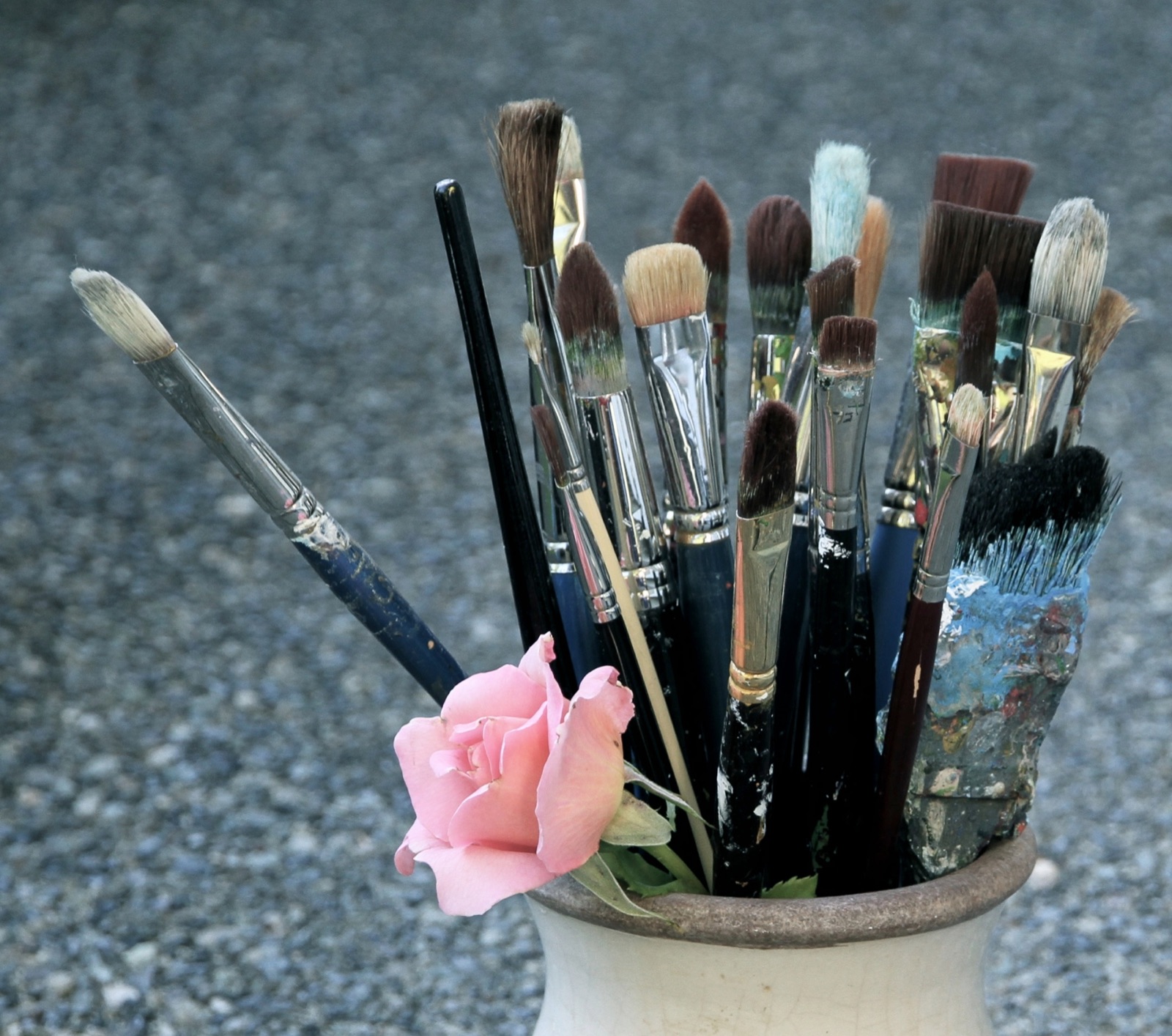
Understanding the characteristics above helps guide my pedagogical practice. It also makes me wonder why the discussion of passion in education is often only limited to the stereotype of the gifted learner. I imagine that, given the time and support to build on their passions, a classroom full of diverse learners from different cultures, socio-economic backgrounds and at various cognitive developmental stages would all experience fulfillment and happiness in their abilities. Valuing the passion to learn and valuing children’s specific passions goes hand in hand, in that these actions create an attitude about learning that is constructive and meaningful. Unfortunately, this outlook is in direct conflict with the institution of school, because passion, like the faculties of imagination and creativity, is unpredictable, immeasurable and individualistic.
Maxine Greene and Seeking Clearings
“One tendency in education today is to shape malleable young people to serve the needs of technology and the post-industrial society. However, there is another tendency that has to do with the growth of persons, with the education of persons to become different, to find their voices, and to play participatory and articulate parts in a community in the making. Encounters with the arts and activities in the domains of art can nurture the growth of persons who will reach out to one another as they seek clearings in their experience and try to be more ardently in the world” (Greene, 1995, p. 132).
Maxine Greene encourages educators to break from the old quantitative models, or the industrial model of the school system. She suggests that breaking away from this system, which moulds and conditions students to become productive economic workers, can only begin through imagination and seeking clearings. In reading Maxine Greene’s work, I agree with her message that Art based pedagogy is one way of achieving this, as students can engage critically with the world as they create art work or reflect with a piece that is already created. Often, connecting the arts with lived experiences is a way to create spaces for imagination and even possibly social change. Maxine Greene “envisions classrooms and communities that value multiple perspectives, democratic pluralism, life narratives and ongoing social change”(Greene, 1995, p.45). She puts great importance in using literature and the arts to explain, explore and to see the world “from the other side of the looking glass”(Greene, 1995 p.94). I remember having so many questions about religion when I attended Catholic School. But there was never any dialogue or reflection about faith. Even though I was part of a community, my identity within it was merely superficial because I did not always feel connected. I was becoming a dispassionate learner.
Mr. B
One day, Mr. B. assigned a creative writing assignment in which we were free to choose the topic. For the first time in elementary school I was given the liberty to write about whatever theme interested me. Without hesitation, I began composing an Egyptian adventure story about a lost treasure. Once the due date came, I found myself so engrossed in my writing that it saddened me to end it. I still had so much to say. I had finally accumulated enough English vocabulary to express the story I imagined. I asked Mr. B if I could keep writing. To my surprise he agreed and said I had as much time as I needed.
Time to Imagine
A pedagogical moment, or what Maxine Greene might refer to as a pedagogical clearing, that stands out for me in elementary school, happened in Grade 7 when I encountered a teacher who let me write. After moving from Montreal to Vancouver, the label of ESL student was attached to me. This was a difficult label, as I was not used to being at school with a disadvantage. I could not express myself the way I could in French and I felt different from everyone. Over time, without realizing it, I began to understand and speak English. Three years after our arrival to Vancouver, my family and I moved to the North Vancouver where I attended yet another school. Out of the four elementary schools I had attended, Mr. B was the first teacher who spoke to us about the world outside the four walls of the classroom. I remember his easygoing nature as he apologized for talking too much and going into the next class’s time. We all reassured him it was fine as none of us wanted him to stop. Mr. B captured our imagination by talking to us about current events and letting us ask questions. Often he returned the question to us, encouraging a response to the problems or situations that arose. Mr. B’s attitude reminds me of Raquel Carabajo’s thoughts in her article Pedagogical Hope (2012), as she states, “In all pedagogical situations, the educator is the one who has the authority to create opportunity. Opportunities, which are the fruit of hope, are always new. A newness in a certain gesture, a fresh attitude, the invention of a strategy that genuinely helps a child or youth to have the opportunity to start over, to show—as if it were the first time—who he or she really is and what they are able to do” (p. 147).
Time is a phenomenon teacher and students often seem to run out of in the classroom setting. We are pushed along the production line of the prescribed curriculum. The faster students need to slow down; the slower students need to speed up. The lucky students seem to be the ones in the middle. Dictated by the bell, student life is all about fitting into the rhythm of the schedule of the day. In such an environment it is difficult to find the opportunity to create spaces that values imagination and individual passions. I feel that not only does the clock confine teachers and students, but so do the artificially separated subject areas. Once again, there is tension between what we say we value in society, which is innovation and creativity, and how we actually structure our schools to operate. Our current structure results in schools where many students are disengaged. “Of course, many people do well in their schools and love what they have to offer. But too many graduate or leave early, unsure of their real talents…too many feel that what they’re good at isn’t valued by schools” (Robinson, 2010, p. 225). We must remember the people in the learning equation.
Lived Curriculum
Ted Aoki speaks of the Curriculum-as-Plan and the Lived Curriculum. The former originates from curriculum planners as statements of the goals, aims and objectives teachers and students must achieve, while the latter highlights the uniqueness of pedagogical situations.
“…external curriculum planners are condemned to plan for faceless people, students shone for their uniqueness, … teachers who become generalized entities… The other curriculum … is the lived curriculum, a world of face-to-face living with Andrew ... with Sara … with popular Margaret, …with Tom… and some 20 others…”(Aoki, p. 265).
I feel the Lived Curriculum that Ted Aoki speaks of is a sensitive aspect of teaching. Allowing teachers the time to be sensitive to the individuality of her students is a characteristic that must be present in the classroom in order to encourage a love of learning. This sensibility allows for human awareness and for teachers to touch the consciousness of students. It is a way to defy the sameness of the Planned Curriculum. If we are to prepare our students for the world of tomorrow, education must resist the mindlessness of conformity and promote curiosity through a more passion-driven curriculum.
Ode to penmanship
By Nathalie Davis
Mark on paper
Straight, curved, up and down
Continuous, evenly spaced, point
Mindful of shape
Mark on paper
Charming, flowing, uniform, individual
Message made clear
Personality emerging through
Mark on paper
Black, Blue, Purple, Gray
Slanted, from left to right
Scripted code
Conscious of movement
Controlled and measured
Rhythmic crusade
“Facts are torn away from their original place in experience and rearranged with reference to some general principle. Classification is not a matter of child experience; things do not come to the individual pigeonholed. The vital ties of affection, the connecting bonds of activity, hold together the variety of his personal experiences.” (Dewey, 1956, p. 6)
Chapter Four: Imagination and the Teacher
Fieldnote: Nonna’s coffee grinder
I am impressed with the students’ sketches of the antique objects I brought in from home today: my grandmother’s wooden coffee grinder, my great-grandmother’s coal iron, an oil lamp, a copper barber shaving set and a ceramic wine carafe from Castellaneta. Arranged in the centre of students’ table groups, the items look strangely out of place. Like rare artifacts from a museum, these everyday handcrafted objects take on a mystical presence. I continue to circulate the room, weaving around desks and chairs. The students are still sketching the still life in front of them. Mindfully, in their own way, they recreate on paper the shapes, curves and shadows they see. Then, I smile to myself as I think of my great-uncle Rafaelle and imagine what he would say about seeing my students, here in Vancouver, taking such care in sketching his sister’s old espresso coffee grinder.

Wide-Awakeness
The meeting of the new and the old struck me the most in this moment. The students, or the newcomers, had so many questions when I first unveiled the antique objects. Even the most distracted and active student became fixated on the items. After letting their imaginations run wild with guesses of what some of the pieces were used for, I revealed to the students their true functions. But it was not so much their practicality that fascinated them. It was more the stories attached to the objects that interested the students. I shared stories I heard during my childhood holidays in Italy. The struggles of life in the early part of the century stirred a lot of dialogue about our privileged western society. For example, most children had never seen an oil lamp, nor had they given much thought about how life would be if families had to share the light of one oil lamp in the evening to see. “[T]o attend to such realities is to open oneself to altogether new visions, to unsuspected experiential possibilities” (Greene, 1978, p. 187). This art lesson, I realize, exposed the students to, as Maxine Greene would say, “the kinds of perceptual and cognitive activities needed for ordering experience and making sense of the world” (Greene, 1978, p. 199). Like Maxine Greene, I see the engagement with this art lesson on multiple levels, from learning to draw and shade, to a deeper social learning where students imagine the world as it could have been. This sort of deeper connection leads to transformation and ultimately a wide-awakeness. Ken Robinson explains this phenomenon: “[A]s soon as we have the power to release our minds from the immediate here and now, in a sense we are free. We are free to revisit the past, free to reframe the present, and free to anticipate a whole range of possible futures. Imagination is the foundation of everything that is uniquely and distinctively human” (Robinson, 2010, p. 59).
Teaching Creatively and the Power of Connections
Teaching creatively recognizes the need for exploration, inventiveness and problem solving. It requires that teachers have in mind how the lessons they are guiding will target some kind of discovery and enlightenment. In the article How Much Does Creative Teaching Enhance Elementary School Students’ Achievements (2006), Schacter, Thum and Zifkin write about their visits to forty-eight upper intermediate classrooms to learn about the relationship between creative teaching and elementary school students’ achievement gains. Early in the article, the authors state that creative people tend to be more content and are more likely to “achieve more, receive more awards, are more likely than their peers to make patentable inventions, publish articles, develop successful businesses, attain leadership positions later in life and are in great demand by businesses worldwide” (p. 61).
The authors theorized that students who are taught by a creative teacher are more successful in all areas of school. With this in mind, the authors created a framework measuring how teacher instruction promotes creative students. The framework is divided into five parts: first, explicitly teaching creative thinking strategies; second, providing opportunities for choice and discovery; third, encouraging intrinsic motivation; fourth, establishing a learning environment conducive to creativity; and fifth, providing opportunities for imagination and fantasy. Using these guidelines, four graduate students were trained in observation and data collection using ethnographic fieldnotes and the study’s standardized chronology. In the end, Schacter, Thum and Zifkin found the results of the research disheartening, stating, “only a handful of teachers we studied implemented instructional strategies that encouraged student creativity” (p. 61). This is alarming because, as expressed previously, the advantages of being a creative person are well established.
I feel that teachers are not to blame for the lack of creativity and imagination found in their classroom practice, because fidelity to the curriculum’s learning outcomes and the pressure of test preparation have become the priority in education. As Maiers explains in the epilogue of The Passion-Driven Classroom (2011), “We are being asked to remove love and emotion from our instruction. We have teacher-proofed the curriculum and everything that goes with it. Tragically, as a result we have passion-proofed the learning” (p. XVIII). The lack of time, the loss of humanity and the unrealitic expectations of the curriculum and assessments create an anxious environment for educators. Every September, my colleagues and I light heartedly say that beginning the new school year is like jumping onto a rollercoaster ride. We begin at a slow and steady pace, climbing the hills and then holding on for dear life as we come down them at uncontrollable speeds. In the midst of all the ups and down we laugh, shriek and struggle to keep balance. Then, at the end of the ride, we can only hope that we, as teachers, have left the students with the courage and curiosity to embark next year for yet another ride.
Reflecting on my teaching over a twenty-year span, my early years were purely focussed on the curriculum. It took me a few years to realize and trust that what truly matters in the classroom are the connections I make with my students. Once I allowed myself the time to get to know the students in my class—such as where they come from and what their passions and talents are—I was better able to create a balanced environment where the curriculum did not outweigh the people I taught. We are inundated by research indicating “how the world has changed, that learners are different now, and that the jobs of the future are waiting to be created” (Maiers, 2011, p. 12). So I wonder why it is taking the educational system and its policy makers such a long time to transform the way we are in the classroom? Why is it so difficult to move away from conformity towards creativity? “The key to this transformation is not to standardize education but to personalize it, to build achievement on discovering the individual talents of each child, to put students in an environment where they want to learn and where they can naturally discover their true passions” (Robinson, 2010, p. 238).
Characteristics to Drive Passionate Learners
Merriam and Webster define passion as “intense, driving, or overmastering feeling or conviction,” and “a strong liking or desire for or devotion to some activity, object, or concept.” Passion captivates our learners and encourages them to make a commitment to their education each day. I feel there exists a gap between what learners are accomplishing now and what they have potential to accomplish. As students move through the education system, too many of them lose connection with their true talents, which results in them not knowing what they are truly capable of achieving. This is not only the case for the students, but also for educators. A teacher’s passion is just as critical as her student’s passion. “When the teacher has a high level of passion for the material, it makes the information come alive and stirs interest and motivation” (Maiers, 2011, p. 8).
Reflecting on the journey of this capstone project, the characteristics I consider essential in creating classrooms as spaces where the newness and wonder of learning are sustained are curiosity, courage, collaboration and accountability. Teachers can encourage students to be lifelong learners by valuing curiosity. Promoting free exploration in the classroom and engaging the students in dialogue and inquiry must be where the curriculum begins. “Each new experience adds to the accumulated meaning of experience for each individual and sets the stage for present and future possibilities. While the present is conditioned by the past, every moment is also full of future possibilities for change and new direction” (Slattery et al., 2007, p. 550). Courage is another characteristic that promotes a passion to learn. In this context, I see courage in terms of perseverance by the teacher and the students. The teacher is courageous to resist the comfort in steady and predictable routines, like the prescribed curriculum. She has the courage to plan classroom learning experiences that may be unpredictable, individualistic and even messy. Wonderful things can happen when we have the courage to defy perfection, to be vulnerable and wrong. For the students, a classroom with a courageous atmosphere will invite them to be confident in their thoughts and to be brave enough to try something new. Collaboration between teacher and students, as well as amongst students themselves, is also key in creating an inspiring learning environment. To me, the focus is on interacting and working together, whether it is on a group project or on an individual passion project. Growing as a person comes from making connections and learning new ways of being in the world. Accountability is another part of creating passionate and lifelong learners. For students, it means being accountable and active in their learning—children knowing and naming what it is they are learning at school. Taking ownership of their knowledge happens once they can present their learning in their own voice, with their heart and soul. These four characteristics can be separated from one another for the sake of exploration, but truly curiosity, courage, collaboration and accountability are best understood in tandem.
Fieldnote: The crosswalk
Today the grey skies cover the city like a soft silk scarf. The familiar sound of the morning school drop-off rings in my ears as I stand at the busy crosswalk. Hastings School is like a beehive: a densely packed matrix of organized spaces, needing to keep order, people coming and going. The buzzing of life happens here. To my right is a young dad; his baggy jeans sag below his boxers, his rapper-style bomber jacket and the thick gold chain around his neck personifying a gangster. He holds his daughter’s little hand in his, waiting to cross the street. In front of us, a woman from the community smiles as she steps off the curb. She is like a ray of sunshine in the bright yellow pineapple-print dress she has squeezed herself into. Her full round figure is amplified as the fabric of the dress hugs her every curve. She bounces across the street, her attitude complementing her cheerful outfit. The man walking behind her, wearing a dark navy business suit, has just kissed his son goodbye. His face is creased with deep lines of concern. He is in a rush. He looks ahead, his worried stare contrasting with the gleeful woman next to him. I step onto the crosswalk towards the entrance of the school, as I do every weekday morning, but today I cannot help but take particular notice of all the distinct faces around me.
Unity within Diversity
The scene at the crosswalk in front of Hastings School is a representation of the children I teach in my inner city classroom. Like a cross section of society, my classroom reflects the diversity of people in East Vancouver. “I stand at the crossing point of too many social and cultural forces; and in any case, I am forever on the way. My identity has to be perceived as multiple even as I strive towards some coherent notion of what is humane and decent and just” (Greene, 1997, p. 1). Under one roof, I teach a community of children from different religions, cultures and traditions. I teach children who come from conventional families, whose parents are educated and from a higher socio-economic background. I teach children whose parents suffer from physical and substance abuse, violence and poverty. I teach children raised by single parents. I teach children from same-sex marriages. I teach children dealing with mental illnesses, disabilities and learning difficulties. I also teach children who are passionate, creative and imaginative. This is where the common ground lies for all of us.
I see passion, creativity and imagination as the driving force in transforming the prescribed curriculum and bringing unity within diversity in my classroom community. “An educational practice must be instituted that proposes and takes advantage of situations where the learners may experience the power and the value of unity within diversity… It must do everything to ensure an atmosphere in the classroom where teaching, learning, and studying are serious acts, but also ones that generate happiness” (Freire, 1997, p. 90). After all, in an urban setting where identity can put into question a child’s sense of belongingness, I suggest that passion-driven learning is the platform celebrating togetherness. As the woman wearing the pineapple dress on a dreary fall morning revealed, happiness and belonging come from within.
Genius Hour
A short time ago, I read an article about the use of Genius Hour in the classroom. Genius Hour, originating from innovative companies such as Google, allows its developers to use twenty percent of their work time to explore any project they want. The idea is that when people are allowed to work on something that interests them, productivity increases. Google’s policy has worked so well, it has been said that about half of Google’s projects, such as Gmail and Google News, have been invented during this creative time period. Genius Hour, transferred to the classroom, challenges students to explore something they want to learn about. The teacher provides a set amount of time every week for students to work on their passion projects. The students are given several weeks to research the topic of their choice before creating a product to share with the class, community or even the world.
The idea of Genius Hour resonates with me both as a teacher and as a learner. As a teacher, I feel inspired by the possibilities that can arise from giving students the freedom to explore and inquire. My hope is that my students discover their unique passions when given the time to investigate a subject in greater depth. Since careers in the 21st century are evolving, I feel education should progress towards pedagogical methods that encourage more creative, inquisitive and engaged learning. Correspondingly, as a learner, Genius Hour is helping me understand the link between imagination, creativity and a passion for learning. It highlights the idea of resisting the taken-for-grantedness of the world and of how “learning becomes part of the personal being of the student” (Van Manen, 1997, p. 24). Interested and engaged students become lifelong learners.
“Making passion a part of our language changes us. It changes our thoughts, our attitudes, and our behaviors and by simply changing the conversation, we change the culture” (Maiers, 2011, p. 19). I am not suggesting that cultural and socio-economic barriers will magically be broken down by teaching children to find and value their individual passions and talents, but I do believe we can chip away at these barriers by presenting our talents and passion projects to each other in the classroom, hence celebrating moments of togetherness.
“In thinking of community, we need to emphasize the process words: making, creating, weaving, saying and the like. Community cannot be produced simply through rational formulation … like freedom, it has to be achieved by persons offered the space in which to discover what they recognize together and appreciate in common... Again, it ought to be a space infused by the kind of imaginative awareness that enables those involved to imagine alternative possibilities for their own becoming and their group’s becoming” (Greene, 1995, p. 39).

Chapter Five: Closing Discussion
What I Have Learned
The purpose of this capstone paper was to explore what is sacred about imagination and creativity in learning and its role in the meaning of passion for learning. I chose to reflect on how I saw myself as a child, as a student and as a teacher in light of imagination. I also wanted to know what characteristics have to be present in the classroom in order to motivate students to be passionate and lifelong learners.
I have come to realize that I value human experience and connections in the classroom, that I want to take the time to let my students discover their talents and passions and to learn who they are. I want to know how the students in my care make sense of the world, how they perceive it and what inspires them. Perhaps most important to me is a yearning to understand the pedagogical atmosphere and its delicate relationship to the students in my classroom, as I strive to keep imagination and creativity at the centre of my teaching. It will be a continuous endeavour, as imagination is living in the moment, appreciating the clearings and multiple perspectives.
What I Still Struggle With
As I anticipated, the reflections that came about from my personal narratives were both encouraging and troublesome. In an ideal world, I want to strive for the utopic notion of letting children explore and grow through the sort of teaching that stands on pillars of creativity. However, it is clear, standing in the shoes of a full-time working teacher, that the day-to-day in the classroom presents its share of challenges. The reality of large class sizes, a lack of resources, necessary fidelity to the prescribed curriculum and the countless administrative tasks makes it difficult to teach creatively most days.
Finding the strength to fight conformity is the one challenge I find most wearisome. Conforming to teach the way I was taught and conforming to teach the way I was taught to teach is easier and safer than venturing into unknown territory. Breaking away from the norm and allowing imagination and creativity to be the driving force in my classroom is frightening. As the authority in my class, I must find the balance to trust and allow the children to learn in many different ways, to “believe that freedom to learn involves not only trust, but also faith in the child’s natural ability and intuition to grow and develop, to move towards becoming a more mature, more educated individual” (Foran and Olson, 2008, p. 21).
Granted, the challenge to fight conformity is also what fuels my passion to teach. This capstone project has inspired me to be attuned to my daily interactions with my students and how I plan their units of study for the year. By acknowledging the spirit of curiosity, courage, collaboration and accountability, I welcome inquiry and change more readily. Ultimately, this study gave me the space to passionately treasure and interpret my stories, in order to grasp the multi-faceted nature of my profession as a classroom teacher.
Concluding Words
As I conclude this Capstone project, images of the Parisian cobblestone streets, the olive trees in the dry Italian soil and the silver pendant attached to my school uniform linger in my mind, floating in and out of memory, mixed with countless other images of people, places and things. And the words of Maxine Greene resonate in my mind, that “All depends upon a breaking free, a leap, and then a question. I would like to claim that this is how learning happens and that the educative task is to create situations in which the young are moved to begin to ask, in all the tones of voice there are, ‘Why?’” (Greene, 1995, p. 6).
References
- Aoki, T. (1993). Legitimating lived curriculum: Towards a curricular landscape of multiplicity. Journal of Curriculum and Supervision, Vol.8, 225-268.
- Aoki, T. (1993). Chapter 6: Teaching as Indwelling Between Two Curriculum Worlds. In. W. Pinar and R. Irwin (Eds.) Curriculum in a New Key: The Collected Works of Ted T. Aoki. New Jersey:
- Arendt, H. (1958). The Human Condition. Chicago: University of Chicago Press.
- Barell, J. (2003). Developing more curious minds. Alexandria, Va: Association for Supervision and Curriculum Development.
- Carabajo, R.A. (2012). Pedagogical Hope. Phenomenology & Practice, Volume 6, No.2, pp. 136-152.
- Clandinin, D. J., & Huber, J. (2007). Narrative inquiry. In B.McGaw, E. Baker, & P.Perterson (Eds.), International encyclopedia of education (3rd ed.). New York, NY: Elsevier.
- Coleman, L. J., & Guo, A. (2013). Exploring Children’s passion for learning in six domains. Journal for the Education of the Gifted, 36(2), 155-175. doi:10.1177/0162353213480432
- Dewey, John. (1956). The Child and the Curriculum. Chicago: The University of Chicago Press Ltd., 3-31
- Engel, S. (2011). Children's need to know: Curiosity in schools. Harvard Educational Review, 81(4), 625.
- Foran, A. & Olson, M. (2008). Seeking Pedagogical Places. Phenomenology & Practice, Volume 2, No.1, pp. 24-48.
- Freire, P. & Freire, A. M. A. (1997). Pedagogy of the heart. New York: Continuum.
- Glithero, L. & Ibrahim, A. (2012). Pedagogy of the Moment: A Journey on Becoming Wide-Awake. Transnational Curriculum Inquiry 9.
- Greene, M. (2009, February 26). The 3rd Annual Radical Philosophies & Education Seminar: Maxine Greene. Teachers College, Columbia University.
- Greene, M. (1995). Releasing the imagination: Essays on education, the arts, and social change. San Francisco: Jossey-Bass Publishers.
- Greene, M. (1978). Landscapes of learning. New York: Teachers College Press.
- Hurren, W. & Hasebe-Ludt, E. ( 2011). Bringing curriculum down to earth: The terroir that we are. JCT: Journal of Curriculum Theorizing. Special Issue on Sensual Curriculum: Understanding Curriculum of and Through the Senses. (PDF)
- “imagination.” Oxford Dictionary.com. (8 November, 2014) http://www.oxforddictionaries.com/us/definition/american_english/imagination
- Jardine, D. (1990). To Dwell With a Boundless Heart :on the integrated curriculum and the recovery of the earth. Journal of Curriculum and Supervision. Vol. 5, No. 2 pp.107-119.
- Leggo, C. (2010). Narrative inquiry: Honouring the complexity of the stories we live. Brock Education : A Journal of Educational Research and Practice, 14(1)
- Levinson, N. (2001). The paradox of Natality: Teaching in the Midst of Belatedness. Boulder, Colorado and United Kingdom: Westview Press.
- Maiers, A., & Sandvold, A. (2011). The passion-driven classroom: A framework for teaching & learning. Larchmont, NY: Eye on Education.
- Osterman, K. (2000). Students’ need for belongingness in the school community. Review of Educational Research, 70(3), 323-367.
- Pelias, R. J. (2004). A Methodology of the Heart: Evoking Academic and Daily Life. Walnut Creek: AltaMira Press.
- Pinar, W. F. (1998). The passionate mind of maxine greene: I am-- not yet. Bristol, PA: Falmer Press, Limited (UK).
- Robinson, Ken. (2006, February). Ken Robison: How schools kill creativity [video file]. Retrieved from www.ted.com/talks/ken_robinson_says_school_kill_creativity/recommendations
- Robinson, Ken. (2013, April). Ken Robison: How to escape education’s death valley [video file]. Retrieved from www.ted.com/talks/ken_robinson_how_to_escape_education_s_death_valley?language=en
- Robinson, K., & Aronica, L. (2009). The element: How finding your passion changes everything. New York: Penguin Books.
- Schacter, J., Thum, Y. M., & Zifkin, D. (2006). How much does creative teaching enhance elementary school students' achievement? The Journal of Creative Behavior [H.W. Wilson - EDUC], 40(1), 47.
- Sims, P. (2007). Awakening brilliance: How to inspire children to become successful learners. Toronto; Atlanta, Ga: Bayhampton Publications.
- Slattery, P., Kransy, K. & O’Malley, M. (2007). Hermeneutics, aesthetics, and the quest for answerability: A diabolic possibility for reconceptualising the interpretive process in curriculum studies. Journal of Curriculum Studies, 39(5), 537-558.
- Van Manen, M. (1997). Researching lived experience: Human science for an action sensitive pedagogy (2nd ed.). London, ON: Althouse Press.
From M.Ed. capstone, Urban Learner Cohort 10, Faculty of Education, University of British Columbia. Supervisors: Dr. Karen Meyers and Dr. Munir Vellani.