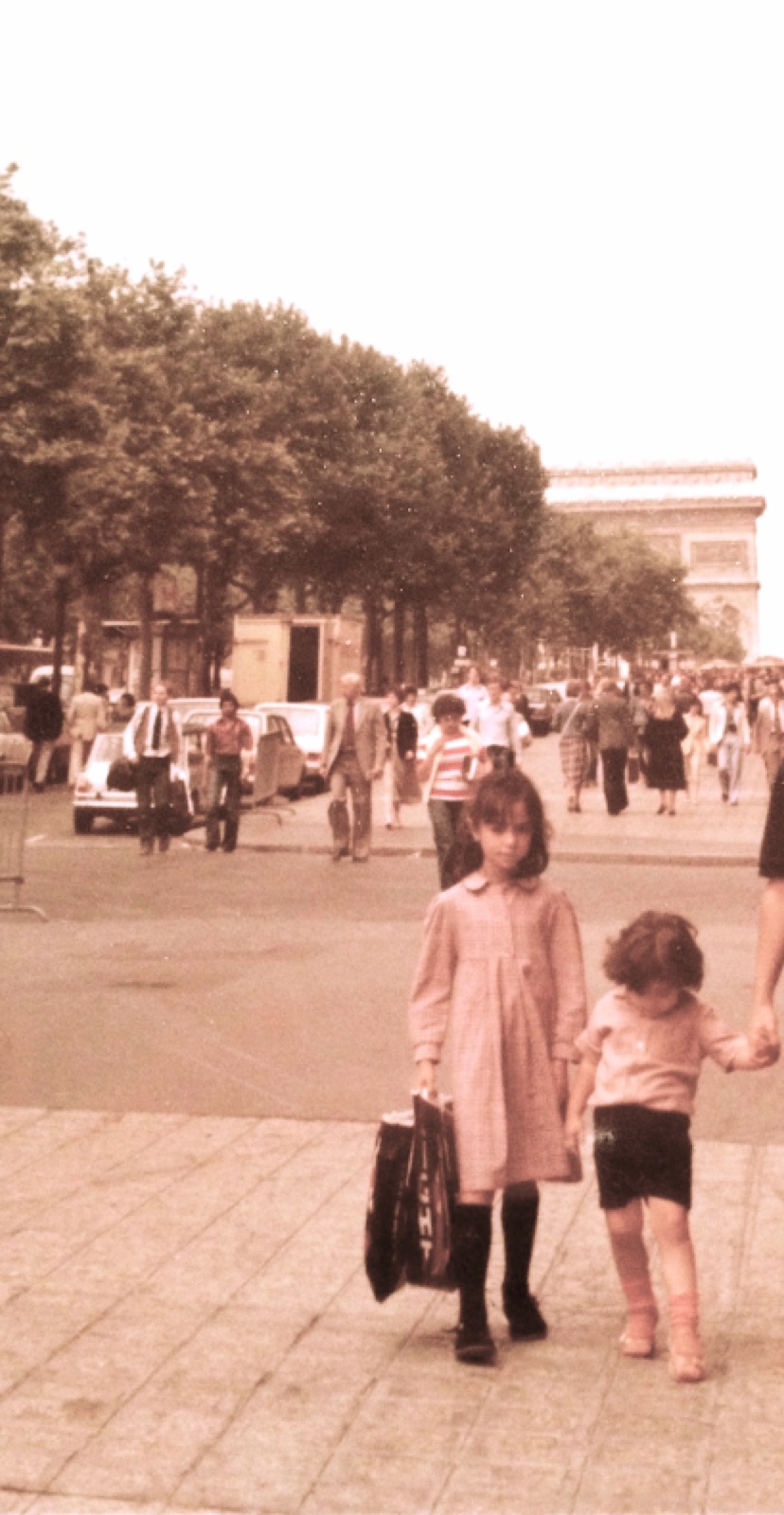
Walking the streets of Paris near Montmartre as a small child, I amused myself by hopping from one large stone to another, trying to avoid stepping on the lines. In my faux fur leopard coat and black patent leather shoes, I imagined slipping and falling between the crevices of the smooth cobblestones and being engulfed in mysterious lands. The constant chatter of my parents and their friends was a distant, comforting sound as I hopped along the city sidewalks. I half listened to them philosophize about one topic or another: which Rolling Stones album was better, what art installation was gaining popularity, which restaurant had the best steak frites.
I lived amongst adults then and I was quite happy. I felt their love and attention flutter around me. The newness of my world and the discoveries I made unravelled themselves simply by my being present in the world. The many stories I heard about the city I lived in were my first lessons. I believed in the Renaissance. I wished I could meet Leonardo Da Vinci. I remember searching for the engraved capital letter N surrounded by the laurel wreath on stone bridges, and knew Napoleon had them built for his empire. Uncovering these codes made me feel I belonged.
I only attended Kindergarten a short time. My mother, Laura, taught me from home, as she did not see the urgency for children to attend school at such a young age. I completely agreed. Those were my formative years, from birth to age five.
Then came the big move to Canada. All I knew and believed in changed. I adapted to my new place. I quickly learned to like school since I felt I had no choice. Everyone attended school and I was excited to learn. Before the end of my first year, I remember being disappointed that they were not teaching me more. Or was it they were not teaching me what I wanted to learn?
From Awakening the Imagination (M.Ed. capstone), 2014